There is something deeply personal about a small home. Every corner becomes part of your daily rhythm: where you enjoy your morning coffee, settle in with a book, or gather with someone you love.
With thoughtful design, even a compact room can feel comfortable, expressive, and beautifully composed. At Maison de Joie Designs, that process begins with a simple question: How do you want to live and feel in your home?
Let the answer guide every choice that follows.
Begin with the way you live
Before choosing a sofa or paint color, consider what your space needs to do. Do you work from home, host friends, or need a quiet place to recharge?
Give priority to the activities that matter most. If you rarely dine formally, a compact table may serve you better than a large dining set. If reading is part of your evening routine, make room for a comfortable chair and well-positioned lamp.
Notice what feels inconvenient, too. A bag that always lands on the floor may need a hook near the door; a crowded kitchen counter may point to a storage problem.
A beautiful home begins with these everyday details.
Plan movement before furniture
A room should feel easy to enter, move through, and use. Before buying anything, measure the space, including door openings, windows, and existing furniture.
Map your usual routes. Can you walk comfortably from the entry to the sofa, pull out a dining chair, and open cabinets without moving something else?
Use painter’s tape to mark furniture dimensions on the floor. It offers a clear sense of scale before you commit.
In a studio or open living area, a rug, sofa, or change in lighting can define distinct zones while preserving an open feel. Give each area a purpose and maintain clear connections between them.
Choose scale thoughtfully
Small rooms do not require every piece to be small. Too many little tables, chairs, and storage units can make an arrangement feel fragmented.
A well-proportioned sofa paired with one generous rug may feel calmer and more inviting. Consider the shape as well as the dimensions: slim arms preserve seating space, exposed legs reveal more floor, and rounded corners ease circulation.
Balance lighter profiles with a substantial piece where needed. A closed cabinet, for example, can provide practical storage and visual permanence.
Aim for a composition that feels comfortable and balanced, with enough open space for each element to breathe.
Give the eye somewhere to rest
A clear focal point helps a room feel composed. It might be a striking painting, a beautiful view, a sculptural light fixture, or a sofa in a rich color.
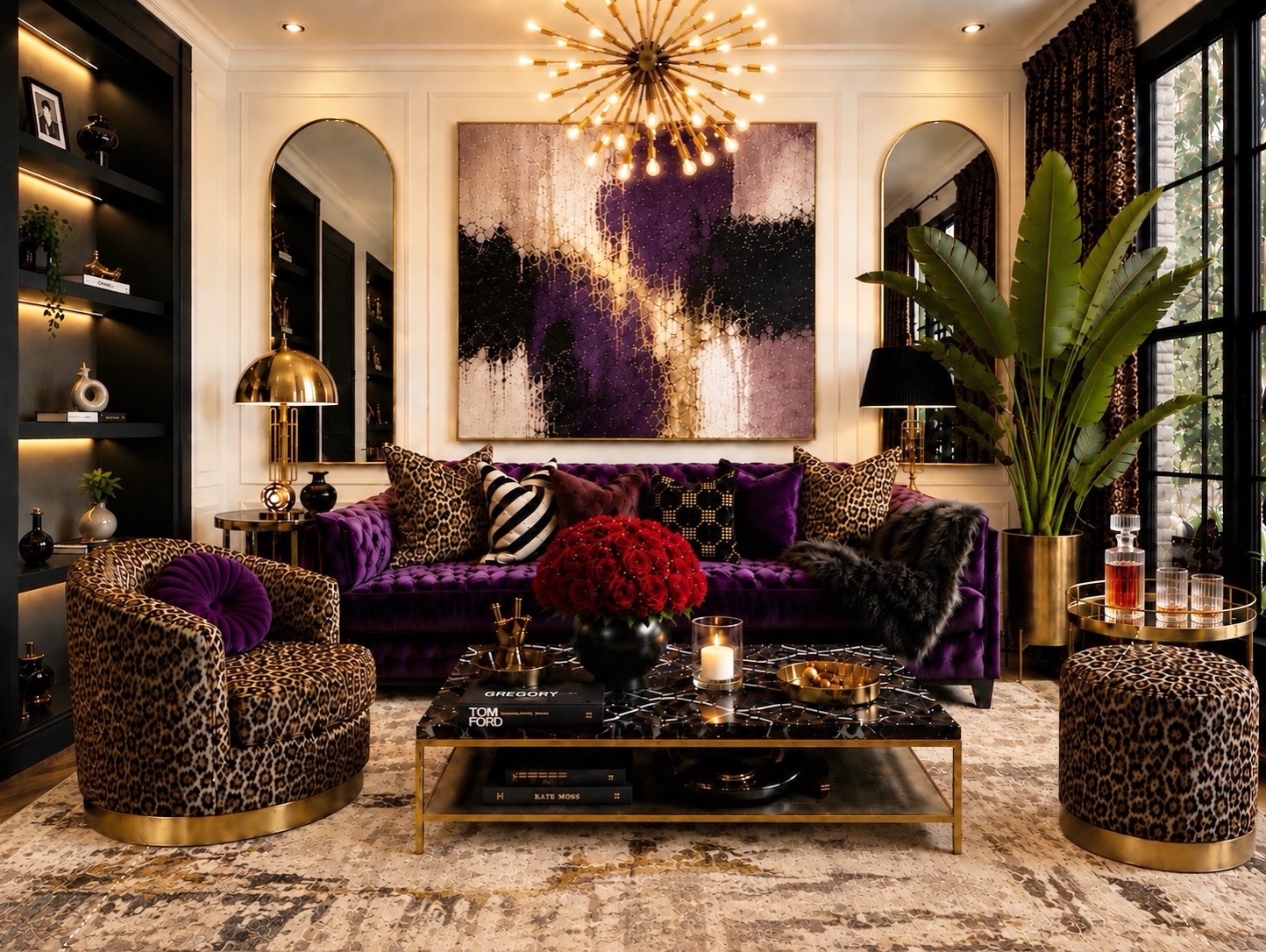
Choose what you want to notice first, then let the surrounding elements support it. Imagine a compact living room with a deep plum sofa, warm ivory walls, a textured rug, and one large artwork. The room has personality and contrast, yet each element remains visible.
Even maximalist interiors benefit from this sense of order. Pattern, art, and collections can coexist beautifully when colors repeat and some surfaces or sections of wall remain open.
Create continuity through color and materials
A connected palette helps adjoining areas feel harmonious. Begin with a few colors and materials you love, then repeat them in different proportions.
Warm white walls might sit alongside oak furniture, burgundy upholstery, and subtle brass details. A color from a painting could reappear in a cushion or ceramic bowl.
Light colors create an airy impression, while deeper shades bring intimacy and depth. Consider the atmosphere you want and the daylight your room receives, then test paint samples on different walls throughout the day.
Texture adds richness without adding clutter. Linen, velvet, wood, woven fibers, and stone each bring a distinct quality to a restrained palette.
Layer light and place mirrors with purpose
Lighting shapes how a small room feels from morning to evening. Combine general illumination with task lighting and softer sources for atmosphere.
A reading lamp beside a chair, a pendant over a dining table, and a small lamp on a cabinet can create comfortable pockets of light. Where practical, wall-mounted fixtures free valuable tabletop space.
Mirrors can add depth and reflect available light, but placement matters. Consider what a mirror will reflect: a window, artwork, or considered arrangement can enhance the room, while a busy countertop may only amplify visual clutter.
Let lighting and mirrors support the composition.
Make storage part of the design
Plan storage around what you actually own. Everyday items should be easy to reach and easy to put away.
Closed storage contains visual clutter, while open shelves display books and objects you enjoy seeing. A combination of both often works best.
Choose furniture that serves more than one useful purpose, such as an ottoman with concealed storage, a bed with drawers, or an extending dining table. Make sure each feature is convenient within your layout.
Finish with pieces that mean something to you—a collected artwork, favorite vase, or object brought home from your travels. These personal details give a thoughtfully planned room its warmth.
Your home deserves care at every size. With intention, a small space can offer comfort, beauty, and the pleasure of living somewhere distinctly yours.
Ready to make more of your space? Explore Maison de Joie Designs’ design consultations and e-design services. Let’s create a home that reflects your style and supports the way you live.
Back to the Journal