The warmth of wood beneath your hand. Morning light moving across a kitchen counter. A soft towel waiting after a bath. Often, the moments that make a home feel welcoming are the simplest.
Calm, natural interiors make room for these everyday pleasures. Thoughtful materials, gentle lighting, and an intuitive layout can create a setting where daily routines feel easier and more enjoyable.
Japandi and hygge offer complementary ways to understand this connection between our surroundings and how we live.
Where simplicity meets comfort
Japandi brings together Japanese and Scandinavian design influences through clean lines, natural materials, craftsmanship, and purposeful details. Its appeal lies in the balance between simplicity and warmth: a room feels considered, yet comfortable enough to settle into.
Hygge, a Danish concept associated with coziness, contentment, and togetherness, adds another dimension. It is a quality of experience—the pleasure of sharing a meal, enjoying a quiet cup of tea, or spending an unhurried evening at home. The glow of a candle, the softness of a rug in the bathroom or beneath the kitchen’s dining table, and a warm drink in a favorite cup bring that feeling into everyday life. These simple details add coziness, familiarity, and comfort.
Together, these ideas encourage interiors that feel both composed and welcoming. Japandi helps shape the space; hygge invites us to enjoy it.
Materials that invite a closer look
A quiet palette allows subtle details to become more noticeable: the grain of oak, the variation in stone, the uneven surface of a handmade ceramic bowl.
Warm ivory, sand, and soft greige provide a gentle foundation. Deeper brown or charcoal accents can introduce definition, while woven textiles and matte finishes add softness. The balance comes from how these elements relate to one another.
Natural materials also bring individuality. Wood develops character with use, and a favorite object may become more meaningful over time. Choosing pieces we enjoy living with gives a room a sense of continuity.
There is no need to replace everything to achieve this feeling. An existing wooden table, a linen runner, or a treasured vessel can be a starting point.
The kitchen: a place for everyday connection
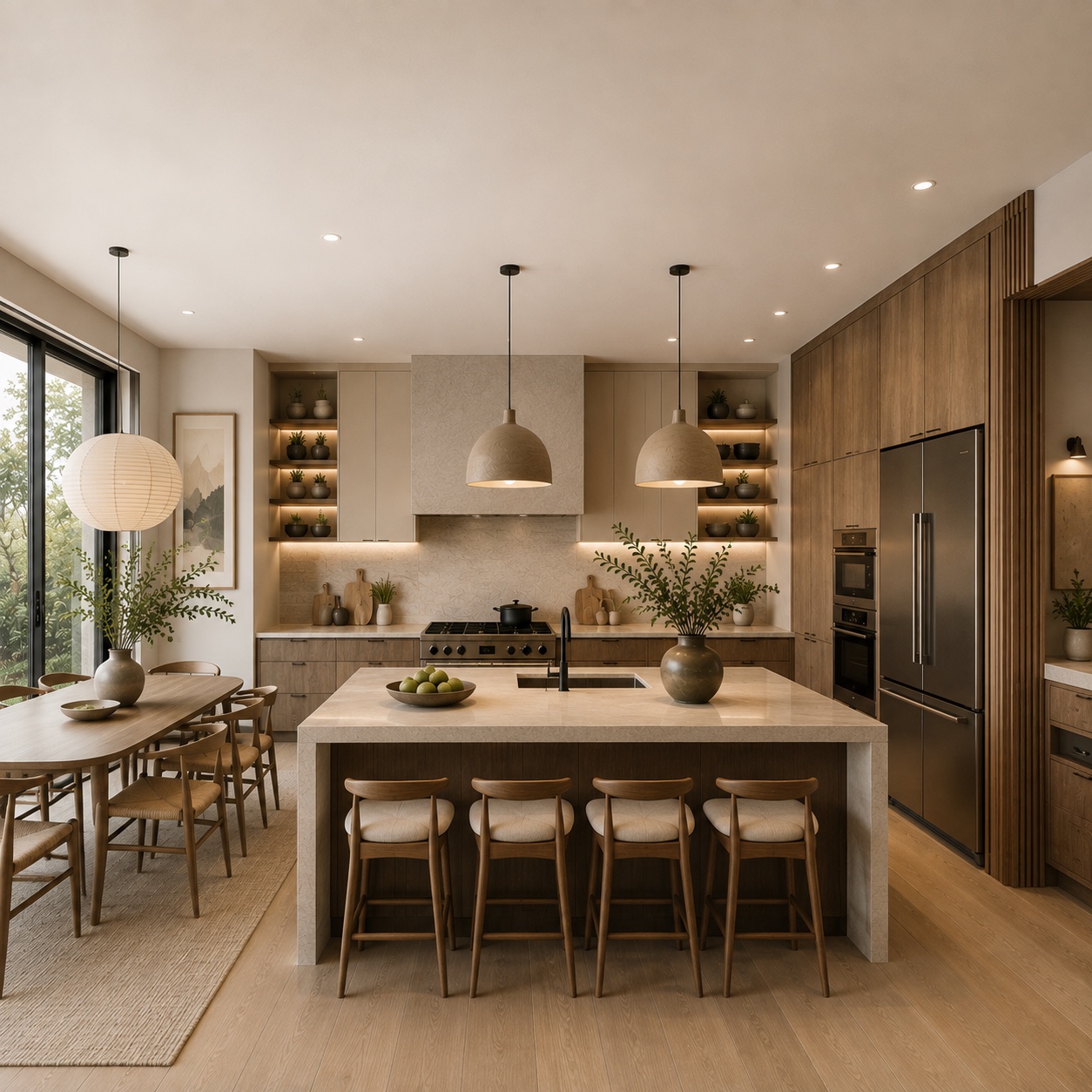
The kitchen holds the first coffee of the morning, the preparation of a familiar meal, and conversations that continue long after the plates are cleared.
In this Japandi kitchen, warm wood cabinetry and pale stone surfaces establish a quiet continuity. Rounded seating, textured pendants, and a lantern above the dining table soften the clean architectural lines. Daylight and views of greenery bring a connection to nature into the room.
The island and adjoining table offer places to gather, while ceramics and softly illuminated shelves add a personal touch. The woven rug beneath the kitchen’s dining table brings texture and softness underfoot. A morning coffee enjoyed in a favorite cup adds another layer of familiarity and comfort. These everyday pleasures bring the spirit of hygge to Japandi’s thoughtful simplicity.
The bathroom: space to recharge
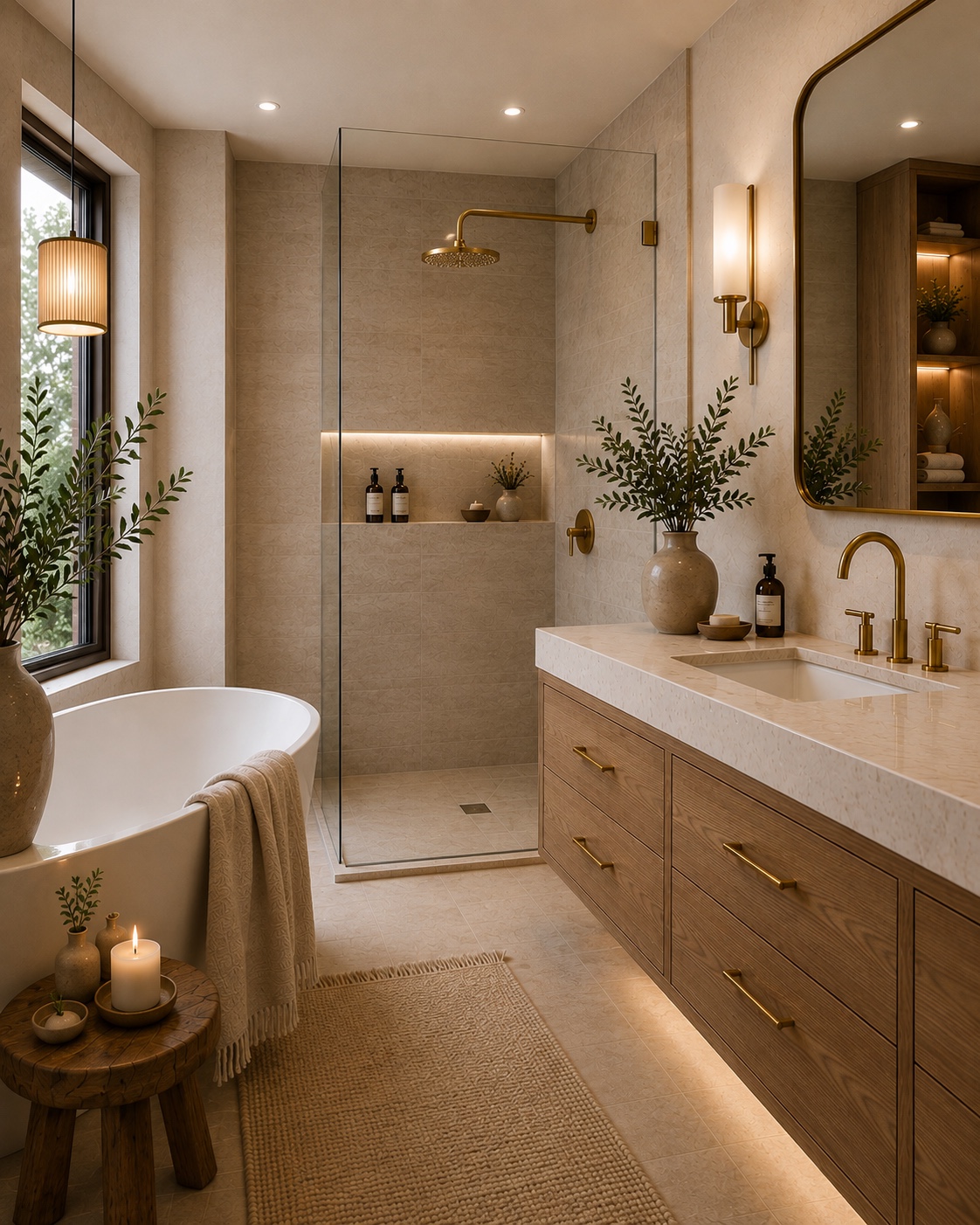
The same warmth carries into the bathroom through a floating wood vanity, softly textured surfaces, and a palette of sand and cream. The curved bathtub and rounded mirror soften the room’s geometry, while brass fixtures introduce a gentle contrast.
Light comes from several sources: the window, pendant, wall sconce, and concealed lighting beneath the vanity and within the shower niche. Together, they give the space depth and an inviting evening atmosphere.
In the bathroom, the woven rug adds softness underfoot, while a towel draped beside the bath brings comfort within reach. The gentle glow of a candle on the wooden stool adds warmth to the evening atmosphere. Together, these simple details express hygge’s sense of coziness and comfort—a quiet invitation to recharge and enjoy a little serenity at home.
Light that brings the room to life
Light reveals the character of a natural interior. Daylight draws out variations in wood and stone, changing the room’s appearance as the hours pass. Where privacy allows, softly filtered light can create a gentle connection to the outdoors.
After sunset, layers of light help the home adapt. Clear illumination supports cooking and grooming, while softer sources make space for a quieter evening. Consider both the brightness and where the light falls; a well-positioned lamp can feel more comfortable than a room lit entirely from overhead.
This flexibility allows a space to follow the rhythm of the people living in it.
A home with room for you
Simplicity feels most inviting when it leaves room for personality. A piece of art, a well-used cookbook, or a cup collected on a trip can bring familiarity to a restrained interior.
Begin by noticing what already gives you comfort. Which chair do you gravitate toward? Where is the light most beautiful? What makes a daily task feel awkward? These observations can guide changes that matter more than following a particular look.
The lasting appeal of calm, natural interiors is found in those lived experiences. Japandi offers a thoughtful approach to form and materials. Hygge reminds us to appreciate the warmth, connection, and quiet pleasures they can help make possible.
A home becomes meaningful through the way we inhabit it—one meal, one conversation, and one peaceful moment at a time.
Back to the Journal